Why is D-type pipe used in municipal engineering
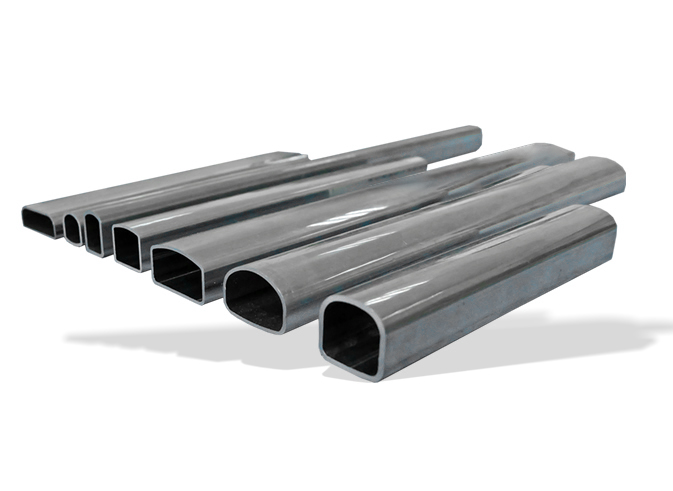
Information summary:In municipal engineering, the application of D-shaped pipes (pipes with a cross-section of "D" shape, usually one side is flat and the other side is curved) is closely related to their unique structural characteristics, which can solve the shortcomings of traditional circular pipes in specific scenarios. The specific reasons are as follows:
In municipal engineering, the application of D-shaped pipes (pipes with a cross-section of "D" shape, usually one side is flat and the other side is curved) is closely related to their unique structural characteristics, which can solve the shortcomings of traditional circular pipes in specific scenarios. The specific reasons are as follows:
1. Save space and adapt to narrow construction environments
Municipal engineering often faces the problems of dense underground pipelines (such as rainwater, sewage, gas, cables, etc.) and limited construction space (such as on both sides of roads and around buildings).
The flat side of the D-shaped pipe can be installed close to the wall, ground or other pipelines, and the curved side faces outward. Compared with circular pipelines, it can reduce the radial occupation space, especially in shallow underground laying, narrow ditches or tunnels, which can significantly reduce excavation width and depth, save engineering land and construction costs.
For example, when laying drainage pipes under sidewalks, D-pipes can be installed tightly against the curbstones to avoid occupying too much space in the pavement structure layer.
2. Improve structural stability and enhance resistance to external loads
Municipal pipelines need to withstand external loads such as ground vehicles, pedestrians, buildings, as well as soil pressure.
The contact area between the flat side of the D-shaped pipe and the foundation (such as the concrete cushion layer) is larger, the force is more uniform, and it is less prone to rolling or displacement due to ground settlement or load concentration. After installation, the overall stability is better than that of a circular pipe.
The structural design on one side of the arc can disperse external pressure (such as vehicle compaction and soil compression), and with the rigid support on the flat side, it can effectively resist radial and axial loads, making it suitable for burial under roads with high traffic volume or in areas where heavy equipment is compacted.
3. Optimize drainage/transportation efficiency and reduce sedimentation
In municipal engineering projects such as drainage and sewage transportation, the cross-sectional characteristics of D-pipes can enhance fluid dynamics performance
The bottom design of the flat side creates a more stable turbulent flow state for the water flow inside the pipeline, reducing the deposition of sediment and debris at the bottom (traditional circular pipelines have lower flow velocity at the bottom and are prone to sedimentation), and reducing the cost of later dredging and maintenance.
For rainwater pipes, D-type pipes can concentrate water flow at the bottom of the flat side during low flow rates (such as initial rainfall), with higher flow velocity, avoiding stagnant water areas; At high flow rates, the curved cross-section can provide sufficient flow cross-section while also considering drainage capacity.
4. Easy to fix and assemble, improving construction efficiency
The flat side of the D-shaped pipe can be directly fixed with brackets, walls, or other pipelines through bolts and clamps, making installation and positioning easier and reducing construction errors caused by pipeline rolling.
When multiple D-shaped pipes are installed in parallel, the flat sides are in close contact with each other, with small gaps and neat arrangement, which can save filling materials (such as sand and gravel) between the pipes and facilitate later inspection and maintenance.
5. Adapt to special scenario requirements
Cable protection conduit: D-type conduit is commonly used to protect underground cables, with the flat side fixed close to the ground or wall, and the curved side facing outward to reduce damage to the cable from external collisions. At the same time, the internal space is neat, making it easy for the cable to pass through and dissipate heat.
Surface mounted pipeline: In open installation scenarios such as bridges and tunnels, the flat side of D-shaped pipes can fit the surface of the structure, which is more aesthetically pleasing and can reduce wind resistance (compared to circular pipelines), as well as reduce vibration and noise during long-term operation.

 CN
CN EN
EN  微信號:WEIXINHAOMA



 Address: No. 15, Liuzhou Road, Yushan High-tech Industrial Park, Changshu
 E-email:info@sinupower.com




 Wechat
 Visit us
 Please Call